Originally posted on Radio Matters. Republished with permission.
Author: Annette Malave, SVP/Insights, RAB
Every election cycle brings a flood of political advertising as candidates and campaigns work to reach voters, communicate their positions and, ultimately, motivate people to cast a ballot. But reaching voters isn’t simply about delivering more political messages. It’s about reaching the people most likely to vote, at meaningful moments in their day and in an environment where the message has an opportunity to be heard.
New research from Audacy suggests the daily commute may be one of those moments. The Commuter Election looks at voters’ attitudes toward the economy, personal finances and the 2026 midterm elections – pointing to an electorate feeling significant financial pressure.
According to a YouGov survey done in conjunction with Audacy, 67% of Americans rate the condition of the U.S. economy as fair or very bad, and 73% say their money doesn’t go as far as it did a year ago. More than half (54%) say the economy and cost of living are the most important issues influencing their 2026 vote.
For commuters, those concerns are even greater. While 54% of all likely voters cite the economy and cost of living as their most important issues, that increases to 59% among those who commute to work at least two days a week and that number climbs to 73% among commuters who are homeowners with children in the household.
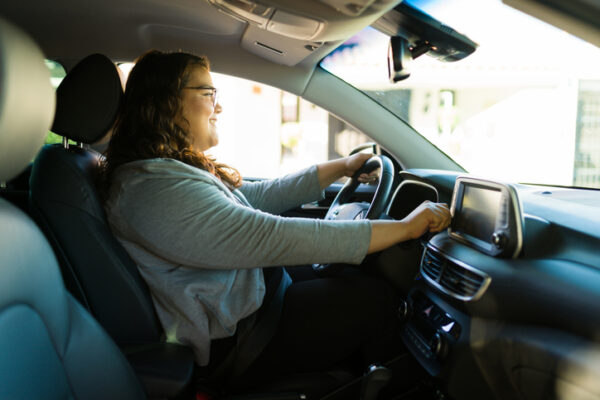
Despite the changes in workplace habits that followed the pandemic, commuting is very much a part of American life. Among employed adults, 78% commute to work at least two days per week and 45% make the trip five days a week. Approximately 90% of U.S. workers who commute do so by car.
What are many of them listening to while they’re behind the wheel? Radio.
During weekday commuting hours, AM/FM radio captures 82% of ad-supported in-car audio listening among employed adults, according to Edison Research data included in the report. Podcasts account for 9%, streaming music accounts for 5% and SiriusXM accounts for 4%. This gives political advertisers an opportunity to reach voters during their daily routine, whether they’re driving to work in the morning or heading home at the end of the day.
Without a doubt, reach matters most when the audience includes people who intend to cast a ballot. Based on survey results, 86% of AM/FM radio listeners are likely 2026 midterm voters, compared with 83% of respondents (likely voters) overall.
Radio also reaches voters who are thinking about the issues at the center of this election. Among likely voters who listen to AM/FM radio during their commute, 60% say the economy and cost of living is their most important issue, compared with 54% of likely voters overall.
There is another consideration for political advertisers – fatigue. Voters can get tired of political advertising. One in three registered voters said overexposure to political ads makes them annoyed with a campaign, per a Digital Remedy study. Diversifying the media mix so that channels can extend reach versus merely duplicating it is one of the key outcomes from this study.
Past campaigns demonstrate what radio can contribute to that mix, amplifying the impact of other media:
- During Pennsylvania’s 2022 U.S. Senate race, Nielsen Media Impact found that adding radio to John Fetterman’s television and connected TV campaign increased its reach by approximately 676,000 registered voters, or 10%.
- In Georgia’s 2022 U.S. Senate runoff, Raphael Warnock’s campaign used radio alongside television and connected TV. Nielsen estimated radio added 659,000 incremental voters, increasing campaign reach by 18%.
The takeaway for political advertising in 2026 is simple. Voters are commuting. They’re listening to radio and are immersed in the information shared with them during their commute. They’re engaged with the issues shaping the election and they intend to vote.
In an election year where campaigns need to reach voters without simply adding more impressions to an already crowded political advertising environment, radio offers something particularly valuable – the ability to extend reach and connect with voters during a familiar part of their everyday lives.
As Election Day approaches, the daily drive with radio as a companion may prove to be an increasingly important road to the ballot box.
Jacksonville.Radio and its related entities are not responsible for the content provided by this news source. This news article features materials protected by the Fair Use guidelines of Section 107 of the Copyright Act. All rights reserved to the copyright owners.
URL of original post: https://www.radiomatters.org/index.php/2026/09/01/the-road-to-the-ballot-box-runs-through-radio/?utm_source=rss&utm_medium=rss&utm_campaign=the-road-to-the-ballot-box-runs-through-radio